Private vs Commercial Helicopter License in 2026: What Each Allows
by Ray Deptula
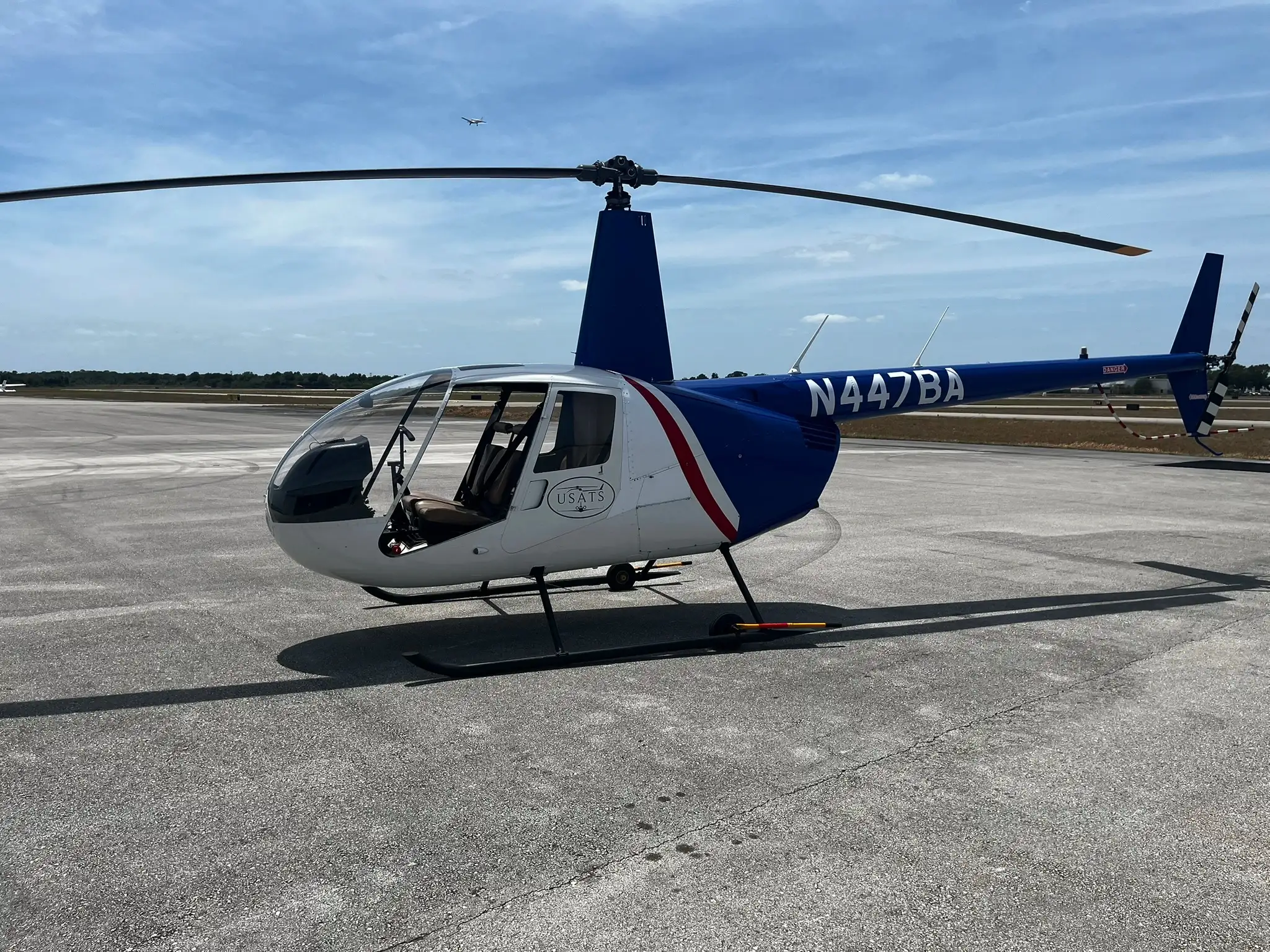
Picture two pilots on the ramp at Space Coast Regional Airport (KTIX) on the same Saturday morning. Both are preflighting a Robinson R44. Both have a passenger waiting. One is taking a friend up the Indian River and splitting the rental with them. The other is being paid to fly. From the ramp, the two flights look identical. On paper, they need different FAA certificates.
That gap is what the private vs commercial helicopter license decision comes down to. A private certificate lets you fly helicopters for yourself and carry passengers, as long as nobody pays you to do it. A commercial certificate is the one that lets you fly for compensation or hire: carrying people or cargo for pay and getting hired as a pilot. If your goal is a paying career, commercial is the certificate you need, and private is the step you earn first.
Below, we cover what each helicopter license lets you do in 2026, where each one stops, the jobs a commercial certificate opens and how to pick your target. Sorting this out early keeps you from paying for training that does not match your goal.
Pay is the line between a private and a commercial helicopter pilot
The FAA draws the line with one phrase: compensation or hire. Under the private pilot rule, 14 CFR 61.113, a private pilot cannot act as pilot in command (PIC, the pilot responsible for the flight) of an aircraft carrying passengers or property for compensation or hire, apart from a few narrow exceptions. The commercial pilot rule, 14 CFR 61.133, removes that limit.
Both certificates carry the same rotorcraft-helicopter rating, and both let you fly with passengers. The difference is what happens with money. If someone pays you to fly, or pays more than their share of the flight’s costs, a private certificate does not cover that flight.
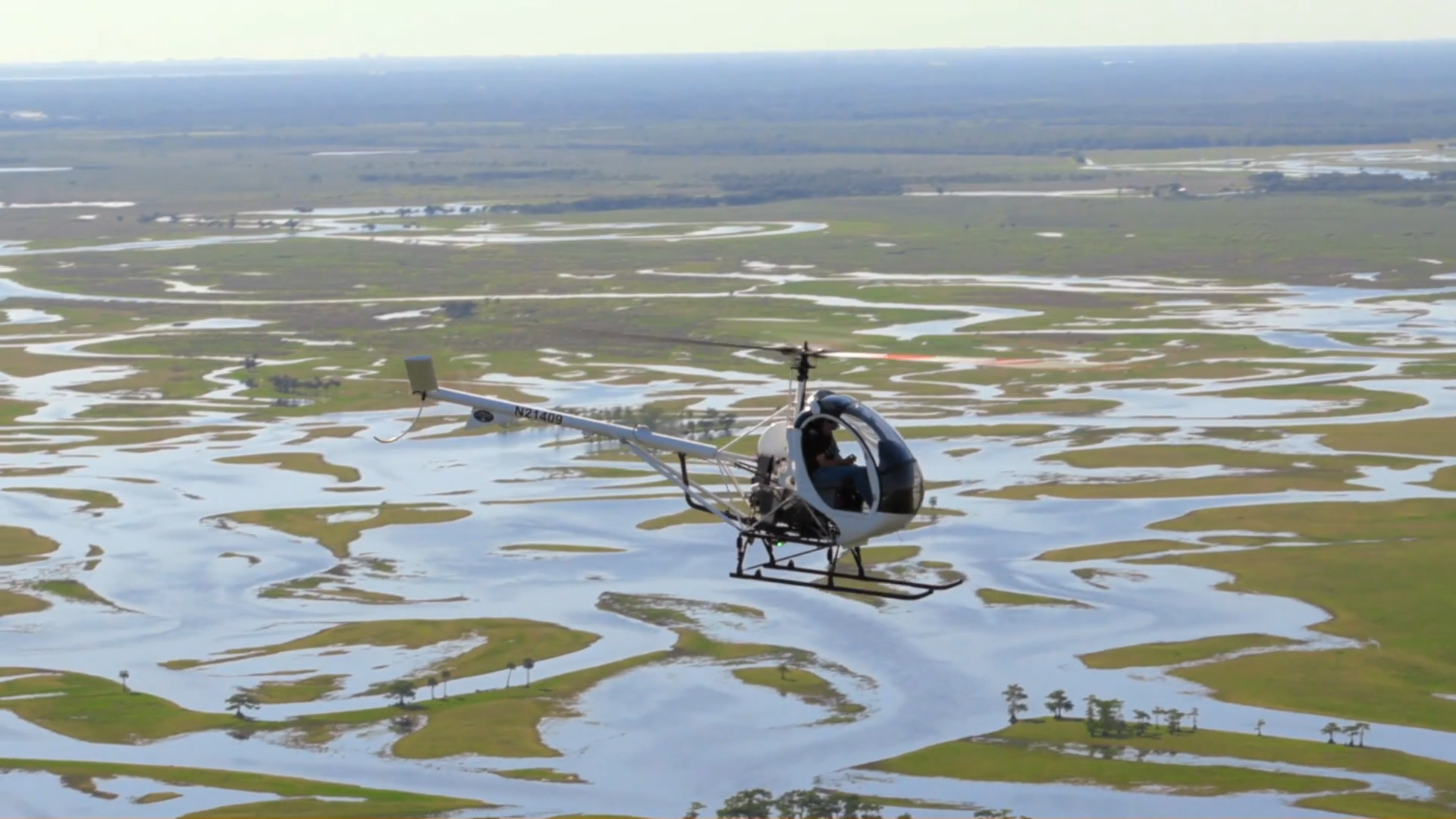
Here at USATS, we train both certificates in the same two helicopters, the Schweizer S300CBi and the Robinson R44, so the move from private to commercial happens in aircraft you already know. You can see every rung of the ladder on our helicopter training overview.
What a private helicopter license lets you do, and where it stops
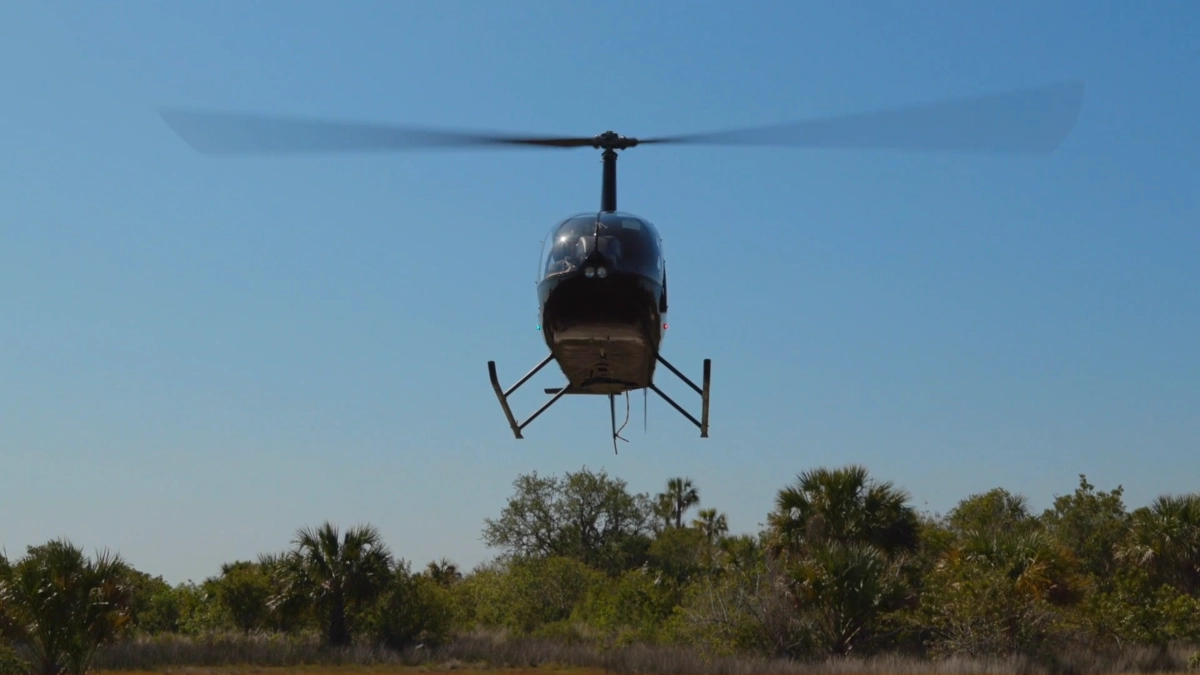
The Private Pilot License (Helicopter) is the first full certificate most helicopter pilots earn. In FAA terms it is a private pilot certificate with a rotorcraft-helicopter rating. With it, you can:
- Fly as pilot in command of helicopters you are qualified to fly, in visual flight rules (VFR) weather, day or night.
- Carry passengers such as friends, family and coworkers, as long as they are not paying you for the ride.
- Share the costs. You can split fuel, oil, airport fees or the helicopter rental with your passengers, as long as you pay at least your pro rata share. With two people aboard, you pay at least half.
- Fly for your own business when the flight is only incidental to that business and the helicopter is not carrying passengers or property for hire. Flying yourself to your own job sites fits. Carrying a client who pays for the trip does not.
Where it stops: you cannot be paid to fly, you cannot carry paying passengers or paid cargo, and you cannot work as a flight instructor. The few exceptions are narrow. Charity event flights, for example, require at least 500 hours and come with strict limits on the number of events and the distance flown.
To use private privileges, you need at least a third-class medical certificate. You must be 17 to receive the certificate, and the FAA minimum is 40 hours of flight time, including 20 hours of instruction and 10 hours of solo flight. Our private program comes in both Part 61 and Part 141 formats, and our helicopter private pilot guide covers the requirements in depth.
For many pilots, private is the finish line. If you want the freedom of vertical flight for weekends, travel or your own business, a private certificate gives you that without the extra hours a commercial certificate demands.
What a commercial helicopter license adds to your flying
The Commercial Pilot Certificate (Helicopter) keeps every private privilege and adds the one a career depends on. You can act as PIC for compensation or hire, including carrying persons or property for hire.
You must be at least 18 and already hold a private pilot certificate. The FAA minimum is 150 hours of flight time, including 100 hours in powered aircraft (50 of them in helicopters), 100 hours as pilot in command (35 in helicopters, with 10 of cross-country flight in helicopters), 20 hours of training and 10 hours of solo flight. You also train commercial maneuvers and more advanced flight techniques.
To exercise commercial privileges, you need at least a second-class medical, which stays valid for commercial flying through the end of the 12th month after your exam. A commercial pilot holding only a third-class medical can still fly, but only with private privileges.
A few things a commercial certificate does not do on its own:
- Teach. Giving flight instruction takes a flight instructor certificate. A commercial certificate is the prerequisite for a helicopter CFI.
- Fly in the clouds. Flying under instrument flight rules (IFR) takes an instrument rating.
- Sell rides to the public by yourself. Paid passenger flying normally runs through an operator that holds its own FAA authority, such as a charter certificate or a letter of authorization for local passenger flights within 25 statute miles of the departure airport.
One difference from airplanes: an airplane commercial pilot without an instrument rating gets a limit on carrying passengers for hire at night or beyond 50 nautical miles. The helicopter commercial certificate does not carry that limit, although employers can still require an instrument rating. Our helicopter instrument rating builds that skill.
Because every student arrives with different hours, our commercial training is built around the hours you already have. We start with your logbook and plan the flying it takes to reach 150 hours and the checkride standard.
Private vs commercial helicopter license, side by side
| Private pilot (helicopter) | Commercial pilot (helicopter) | |
|---|---|---|
| Carry passengers | Yes, not for hire | Yes, including for hire |
| Get paid to fly | No, apart from narrow exceptions | Yes, for compensation or hire |
| Share flight costs | Yes, paying at least your pro rata share | Yes |
| Fly for your own business | Only when incidental, no paid passengers or cargo | Yes |
| Give flight instruction | No | Not by itself; add a CFI certificate |
| Minimum age | 17 | 18 |
| FAA minimum flight time | 40 hours | 150 hours |
| Medical to use the privileges | Third class or higher | Second class or higher |
| Prerequisite | None (student pilot first) | Private pilot certificate |
| Where you train with us | Private Pilot License (Helicopter) | Commercial Pilot Certificate (Helicopter) or the Commercial Pilot Helicopter Add-On |
The jump in hours is the real gap between the two certificates. Most of the distance from private to commercial is flight time, cross-country flying and PIC experience, which is why planning the two together saves you from flying hours that do not count toward your goal. Our Part 141 vs Part 61 comparison explains how training structure affects that path.
Which helicopter jobs a commercial certificate opens
A commercial certificate is the one that opens paid helicopter work: flight instruction (once you add a CFI), tours, charter, EMS and utility flying. Each of those jobs adds its own requirements on top of the certificate.
- Flight instructor. Add the Certified Flight Instructor (Helicopter) certificate, then a CFII to teach instrument flying. Many new commercial helicopter pilots build their first paid hours as instructors.
- Tours. Paid tour flights run under an operator’s FAA authority. A letter of authorization, for example, covers nonstop passenger flights that stay within 25 statute miles of the airport they start and end at.
- Charter. To fly as PIC for a charter operator under Part 135 in VFR, the FAA requires at least 500 hours, including 100 hours of cross-country time and 25 hours at night.
- EMS, utility and offshore. These operators set their own hour, rating and experience minimums, and an instrument rating often matters. Our post on instrument-rated helicopter jobs goes deeper.
Treat 150 hours as the starting line for a career. Operators and their insurers decide who they hire, and their minimums can sit well above the FAA’s. For pay by job type, see our guide to how much helicopter pilots make.
You learn here from people who have flown those jobs. Our chief flight instructor has flown offshore and military helicopters around the world and holds an ATP in both the US and Europe. Meet the rest of the group on our team page.
How to choose which helicopter license to aim for first
Everyone starts with private, because the commercial certificate requires it. The real decision is whether you stop at private or keep going.
If you want to fly for yourself, private is the goal. Many private pilots later add an instrument rating for the skill and safety margin it builds. If you want to fly for a living, plan the whole ladder from day one. Our Professional Pilot Program (Helicopter) takes students with no flight experience through Private, Instrument, Commercial, CFI and CFII, plus a sling load endorsement.
Already a commercial airplane pilot? Our Part 141 Commercial Pilot Helicopter Add-On builds on the certificate you hold. Whichever path you choose, schedule your FAA medical exam early. Career students should aim for the second-class medical, and an Aviation Medical Examiner (AME) can tell you where you stand. Our guide to your first FAA medical exam shows what to expect.
Cost belongs in the decision too. We work with Stratus Financial, AOPA Finance and We Florida Financial, and you can compare options on our financing page. Our admissions team can give you a current quote for either certificate, built around your schedule.
FAQ
Can a private helicopter pilot carry passengers?
Yes. A private pilot can fly friends and family as passengers. The limit is payment: passengers cannot pay you for the flight. Our private pilot FAQ answers more first-certificate questions.
Can I get paid to fly with a private helicopter license?
No, apart from narrow exceptions. Being paid to fly, or carrying paying passengers or paid cargo, requires a commercial certificate. See our commercial program for that next step.
Can my passengers chip in for the flight?
Yes, within limits. You can split fuel, oil, airport fees or rental costs, as long as you pay at least your pro rata share. Our helicopter training FAQ covers more training basics.
Do I need a commercial license to be a helicopter flight instructor?
Yes. A helicopter CFI applicant must hold a commercial or ATP certificate with a helicopter rating. Our CFI program picks up from there.
What medical certificate does each license need?
Private privileges need at least a third-class medical. Commercial privileges need at least a second-class medical. For questions about your own health history, talk with an AME, and read our medical exam guide.
I already fly airplanes commercially. Do I start over?
No. Our Part 141 helicopter add-ons let airplane certificate holders add helicopter privileges, including a commercial add-on.
Fly the R44 before you choose your certificate
The simplest way to find out whether you want a private certificate for yourself or a commercial career is to feel the controls come alive in a helicopter. On a discovery flight, you sit at the dual controls with one of our instructors, lift off from KTIX and fly out over the Indian River. Afterward, we sit down with you and map the certificates that match your goal. Book your helicopter Discovery Flight and start with the flight itself.