Which Helicopter License Do You Need for Your Goal in 2026?
by Ray Deptula
Before you choose a helicopter license, picture the flight you actually want. Maybe it is a Saturday hop over the Indian River with a friend beside you. Maybe it is a paid tour, a hospital helipad, a load hanging under the helicopter, or a student pilot waiting for you on the ramp at Space Coast Regional Airport (KTIX). Each of those flights needs a different mix of FAA certificates and ratings, and the order you earn them in shapes how much training you pay for.
So which helicopter license do you need? A private pilot certificate covers flying for yourself, including your own business trips. Any flying for pay starts with a commercial pilot certificate. Many jobs then add an instrument rating, a flight instructor certificate or operator experience on top, and the ATP sits at the top of the ladder for pilots who are already working.
Below, we match common goals to the credentials they require in 2026, then lay out the usual order and where each rung fits in our helicopter training at USATS. If you want the full detail on privileges first, our private vs commercial comparison covers what each certificate allows.
Match your goal to the helicopter license it requires
Use this table as your starting map. The second column is the FAA minimum for the role, and the third is what the job adds. Operators set their own hiring minimums, and those vary by company, so treat every FAA number here as a floor.
| Your goal | Minimum FAA credential | What the job adds | Where you train with us |
|---|---|---|---|
| Personal and recreational flying | Private pilot certificate, third-class medical | Optional instrument rating for skill and margin | Private Pilot License (Helicopter) |
| Flying yourself on business trips | Private, when the flight is incidental to your business | No paying passengers or cargo | Private Pilot License (Helicopter) |
| Aerial tours | Commercial certificate, second-class medical | An operator with FAA authority; 500 hours for Part 135 VFR pilot in command | Commercial Pilot Certificate (Helicopter) |
| EMS and air medical | Commercial plus a helicopter instrument rating (or helicopter ATP) | Part 135 experience minimums | Instrument Rating (Helicopter) and Commercial Pilot Certificate (Helicopter) |
| Offshore | Commercial; instrument rating for IFR work | 1,200 hours for Part 135 IFR pilot in command | Instrument Rating (Helicopter) |
| Utility, sling load, agriculture | Commercial certificate | The operator’s Part 133 or Part 137 certificate and a checkout on the load | Professional Pilot Program (Helicopter) |
| Flight instructing | Commercial plus a flight instructor certificate | CFII to teach instruments; SFAR 73 hours for the R44 | Certified Flight Instructor (Helicopter) and Certified Flight Instructor Instrument (Helicopter) |
| ATP-level roles | Airline transport pilot certificate | First-class medical, 1,200 hours | Airline Transport Pilot (Helicopter) |
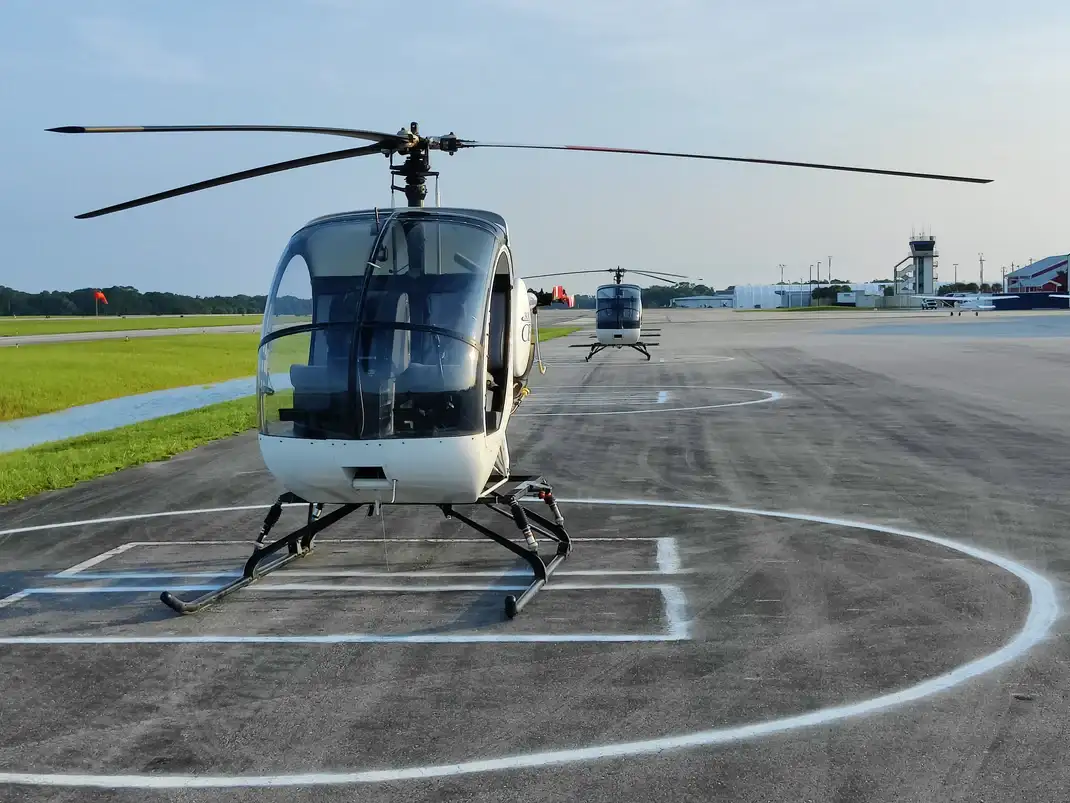
Every path on this table starts in the same place, a private certificate, and with us every rung is trained in the same two helicopters, the Schweizer S300CBi and the Robinson R44. You can see the whole ladder on our helicopter training overview.
Flying for yourself: a private certificate covers weekends and your own business trips
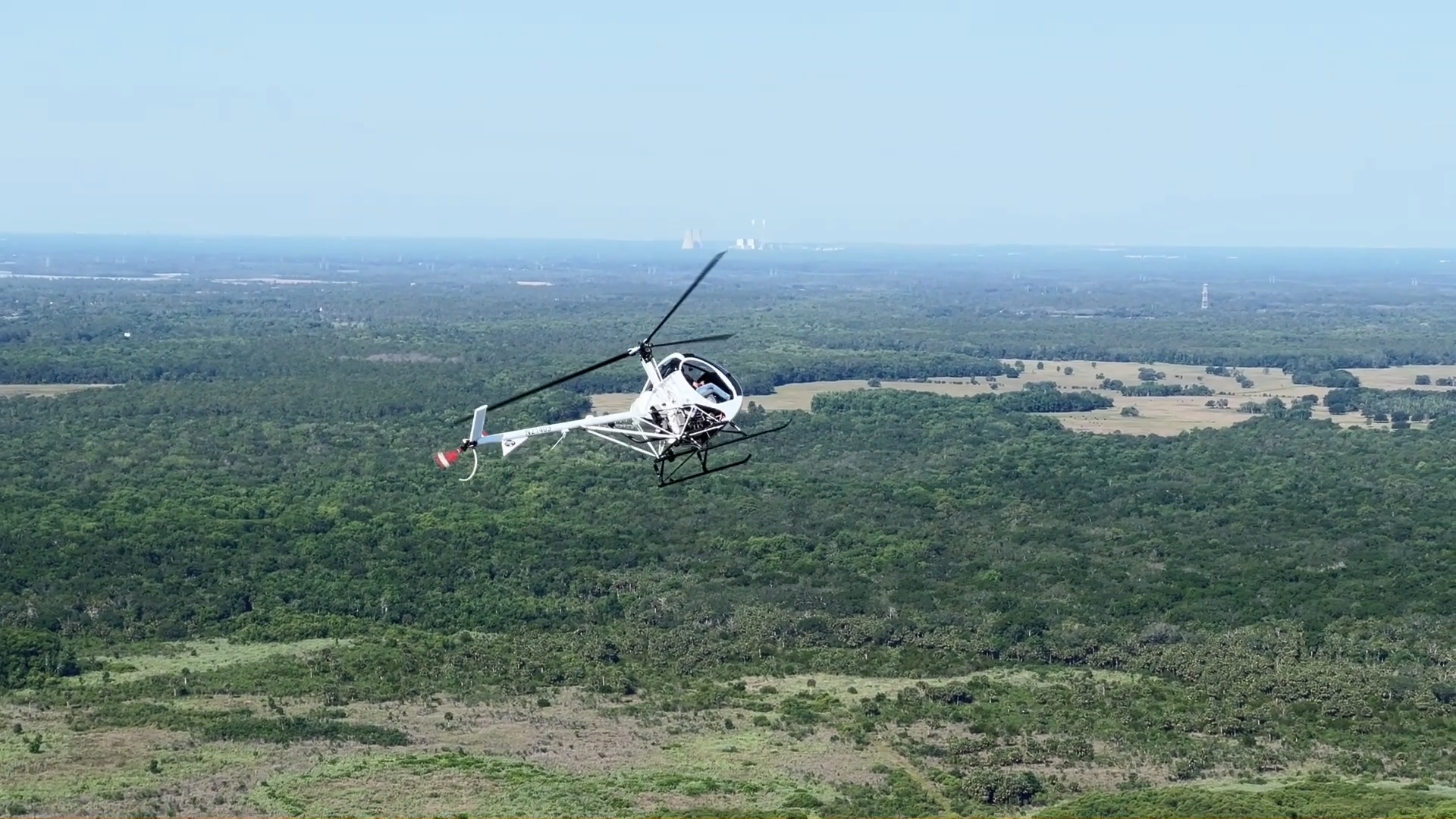
If your goal is personal or recreational flying, the Private Pilot License (Helicopter) is the finish line. You can fly as pilot in command (PIC, the pilot responsible for the flight), carry friends and family, and split fuel, oil, airport fees or rental costs with them, as long as you pay at least your pro rata share.
The same certificate works for flying yourself on business. The FAA lets a private pilot fly in connection with a business or job when the flight is only incidental to that business and the helicopter carries no passengers or property for hire. Flying yourself to your own job sites fits. Flying a client who pays for the trip does not.
To get there, you must be 17, hold at least a third-class medical, and log at least 40 hours of flight time, the FAA minimum, including 20 hours of instruction and 10 hours of solo flight. We offer the private program in both Part 61 and Part 141 formats, and our Part 141 vs Part 61 guide explains the difference.
Many private pilots later add an instrument rating for the precision and safety margin it builds. For personal flying it is optional, and we add it to your plan only when it fits your goal.
Getting paid to fly starts with a commercial certificate
The FAA draws one bright line: flying for compensation or hire takes a commercial pilot certificate. That covers every job in this section. The Commercial Pilot Certificate (Helicopter) requires you to be 18, hold a private certificate and log at least 150 hours of flight time. To use commercial privileges, you need at least a second-class medical.
Most paid helicopter flying happens for an operator that holds its own FAA authority, such as a charter or air ambulance certificate, and that operator decides who it hires. For pay by job type, see our guide to how much helicopter pilots make.
Aerial tours
The helicopter license for tours is the commercial certificate, flown for a tour company with the right FAA authority. That can be a Part 135 certificate or a letter of authorization for nonstop flights that stay within 25 statute miles of the airport they start and end at. To fly as PIC for a Part 135 operator under visual flight rules (VFR), the FAA requires at least 500 hours, including 100 hours of cross-country time and 25 hours at night.
EMS and air medical

If you are asking what license you need to fly a helicopter for EMS, the FAA answer is specific. Under 14 CFR 135.603, a helicopter air ambulance pilot in command must meet the Part 135 pilot experience rules and hold a helicopter instrument rating, or a helicopter ATP that is not limited to VFR. That puts three items on your list: a commercial certificate, an Instrument Rating (Helicopter), and the experience Part 135 requires.
Our instrument course mixes real IFR flights with simulator sessions in six-pack and glass-cockpit helicopters, and it was built by instructors with real-world IFR experience from the North Sea to West Africa. Our post on instrument-rated helicopter jobs covers where the rating leads.
Offshore
Offshore flying happens over open water, often under instrument flight rules (IFR). When an operator flies under Part 135 IFR, the FAA requires the pilot in command to hold a commercial certificate, a helicopter instrument rating or helicopter ATP, and at least 1,200 hours, including 500 hours of cross-country time, 100 at night and 75 hours of instrument time. Our chief flight instructor has flown offshore and military helicopters around the world and holds an ATP in both the US and Europe, so you train with someone who has done the job.
Utility, sling load and agriculture
Utility work such as sling load (external load) flying runs under an operator’s Part 133 Rotorcraft External-Load Operator Certificate. The operator needs commercial or ATP pilots, including a chief pilot, and every pilot must demonstrate knowledge and skill with the specific helicopter and load, backed by a letter of competency or a logbook entry. Agricultural work for hire runs the same way under Part 137, where a commercial agricultural operator must have pilots holding a commercial or ATP certificate. Our Professional Pilot Program (Helicopter) includes a sling load endorsement alongside the core certificates.
Law enforcement
Government law enforcement flights can qualify as public aircraft operations, because the FAA counts law enforcement as a governmental function. For those flights, the agency oversees its own pilot standards, so requirements vary from one department to the next. Check the requirements of the agency you want to join, and our admissions team can help you plan the FAA certificates that line up with them.
Teaching others to fly: the CFI and CFII rungs
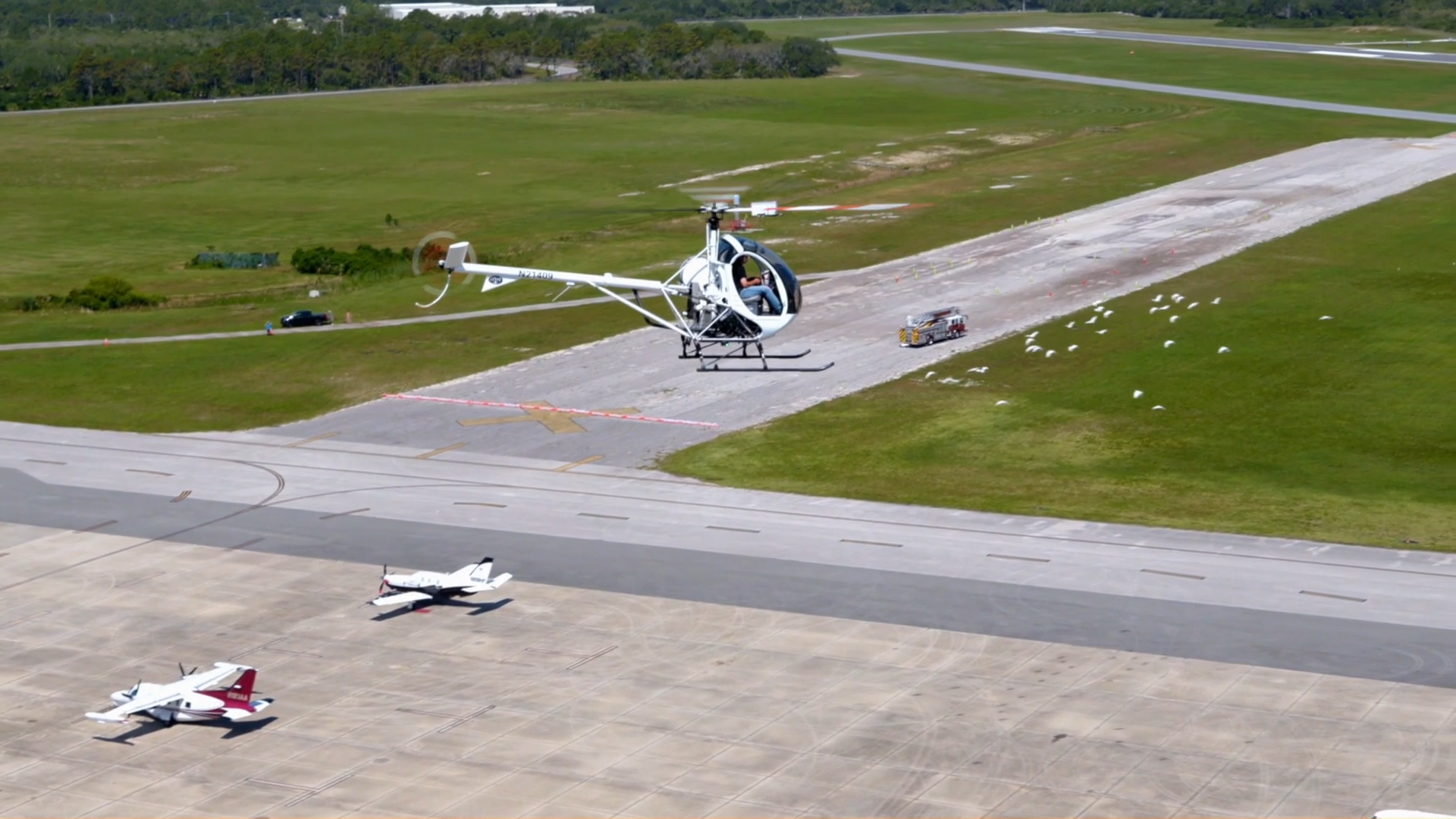
Flight instruction is where many new commercial helicopter pilots build their first paid hours. The Certified Flight Instructor (Helicopter) requires a commercial or ATP certificate with a helicopter rating. Unlike airplane instructors, a helicopter CFI does not need an instrument rating first.
To teach instrument flying, you add the Certified Flight Instructor Instrument (Helicopter), which does require an instrument rating. Robinson helicopters add one more rule: under SFAR 73, an instructor in the R44 needs at least 200 helicopter hours, 50 of them in Robinson helicopters. Our Professional Pilot Program is built so graduates meet SFAR 73 requirements to instruct in the R44.
Our instructors call teaching one of the most challenging and rewarding parts of aviation. It sharpens your knowledge, confidence and leadership for whatever job comes next.
Where the ATP fits in a helicopter career
The Airline Transport Pilot (ATP) certificate is the highest FAA certificate a helicopter pilot can hold. To earn it, you must be 23, hold a commercial certificate with an instrument rating, and log at least 1,200 hours, including 500 hours of cross-country time, 100 hours at night (15 in helicopters), 200 hours in helicopters and 75 hours of instrument time. Exercising ATP pilot-in-command privileges takes a first-class medical.
For helicopter pilots, the FAA requires an ATP only in narrow cases, such as scheduled interstate passenger service by an air carrier. In the Part 135 rules for IFR and air ambulance flying, a helicopter ATP can stand in for the instrument rating. For most pilots, the ATP is a career-advancement credential, and most of the hours behind it are logged while you work as a pilot.
Our Airline Transport Pilot (Helicopter) course is tailored refresher training and checkride prep for experienced commercial pilots, taught by instructors who have passed the ATP checkride. Our managing director, a retired Navy helicopter pilot, holds an FAA helicopter ATP himself.
The usual helicopter pilot career path, rung by rung
Most career-track pilots climb the same helicopter pilot career path, and each rating builds on the one before it:
- Private pilot certificate (helicopter)
- Instrument rating (helicopter)
- Commercial pilot certificate (helicopter)
- Flight instructor certificate (CFI)
- Flight instructor instrument rating (CFII)
- ATP, once you have the experience
The order has some flex. For helicopters, the commercial certificate and the CFI do not require an instrument rating. The CFII, the ATP and EMS pilot-in-command work all do, so planning the instrument rating early keeps those doors open.
If you are starting from zero and want a career, our Professional Pilot Program (Helicopter) bundles Private, Instrument, Commercial, CFI and CFII, plus a sling load endorsement and 200 hours of helicopter flight time. If you already hold an airplane certificate, our Part 141 helicopter add-ons for private, instrument and commercial build on what you have, and you do not take a new knowledge test when you add the helicopter rating at a certificate level you already hold.
FAQ
Which helicopter license do I need just to fly for fun?
A private pilot certificate with a helicopter rating. It lets you carry friends and family and share costs, as long as nobody pays you to fly. Our private pilot FAQ answers more first-certificate questions.
What license do you need to fly a helicopter for tours?
A commercial pilot certificate, flown for an operator that holds FAA authority for tour flights. Part 135 operators need pilots in command with at least 500 hours for VFR flights. Start with our commercial program.
What license do you need to fly a helicopter for EMS?
A commercial certificate plus a helicopter instrument rating (or a helicopter ATP), along with the Part 135 experience minimums. Our instrument rating builds that rung.
Do I need an ATP to fly helicopters for a living?
Usually not. The commercial certificate is the entry requirement for paid flying, and the ATP comes later as you gain experience. See our ATP course for the requirements.
Which medical certificate matches my goal?
Private flying needs at least a third-class medical, paid flying a second-class, and ATP pilot-in-command privileges a first-class. For questions about your own health history, talk with an Aviation Medical Examiner (AME), and read our medical exam guide.
How hard is the first rung?
The FAA’s Helicopter Flying Handbook calls hovering the most challenging part of flying a helicopter, and you master it during private training. Our honest look at how hard a helicopter license is walks through each step.
Fly a helicopter first, then map your certificates with us
The easiest way to test your goal is to feel the controls respond on a helicopter discovery flight. You sit at the dual controls with one of our instructors, lift off from KTIX and head out over the Indian River. Back on the ground, we talk through the flying you want to do and map the certificates and ratings that get you there, rung by rung. Book your helicopter Discovery Flight and let the first flight help you choose.